



Copper Mould Tube Materials and Performance in Continuous Casting
Copper mould tubes are one of the key components used in continuous casting equipment. They are installed in the mould section of the continuous casting machine, where molten steel begins its initial solidification process before being formed into billets of the required shape.
Because the copper mould tube comes into direct contact with extremely high-temperature molten steel, it must provide excellent thermal conductivity, sufficient mechanical strength, and reliable resistance to thermal fatigue. Efficient heat transfer through the mould tube allows the molten steel to rapidly form a solid shell as it passes through the mould, helping ensure stable billet formation and continuous casting operation.
Common Materials Used for Copper Mould Tubes
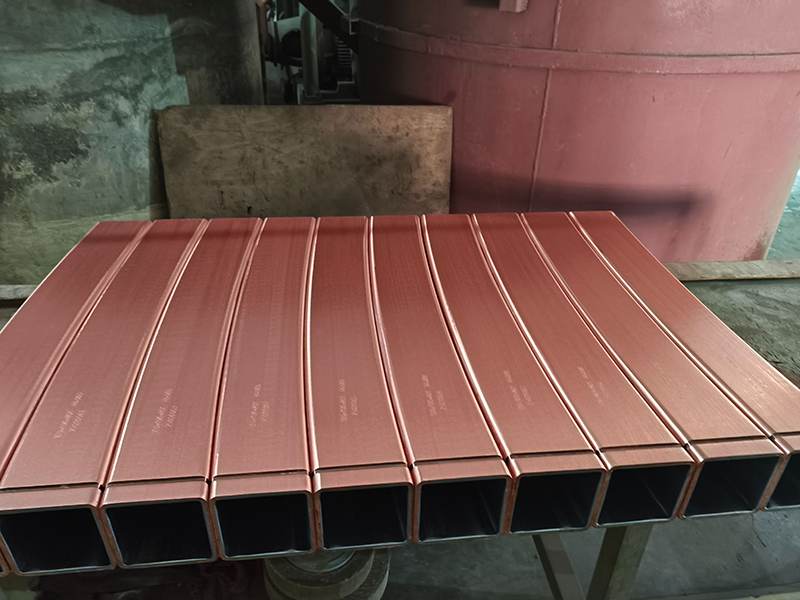
Several copper alloys are commonly used for manufacturing continuous casting mould tubes. The most widely applied materials include Deoxidized Phosphorus Copper (TP2 / Cu-DHP), Silver-Bearing Copper (CuAg0.1), and Cu-Cr-Zr alloy.
The appropriate material can be selected according to the casting conditions, operating temperature, production requirements, and expected service life of the mould.
TP2 / Cu-DHP
TP2, also known as Cu-DHP, is one of the most commonly used materials for copper mould tubes in steel plants.
This material provides good thermal conductivity together with reliable resistance to high-temperature fatigue. It also offers favorable processing and forming properties, making it suitable for producing mould tubes in different sizes and shapes.
Due to its stable performance and relatively economical production cost, TP2 is widely used in conventional continuous casting applications.
CuAg
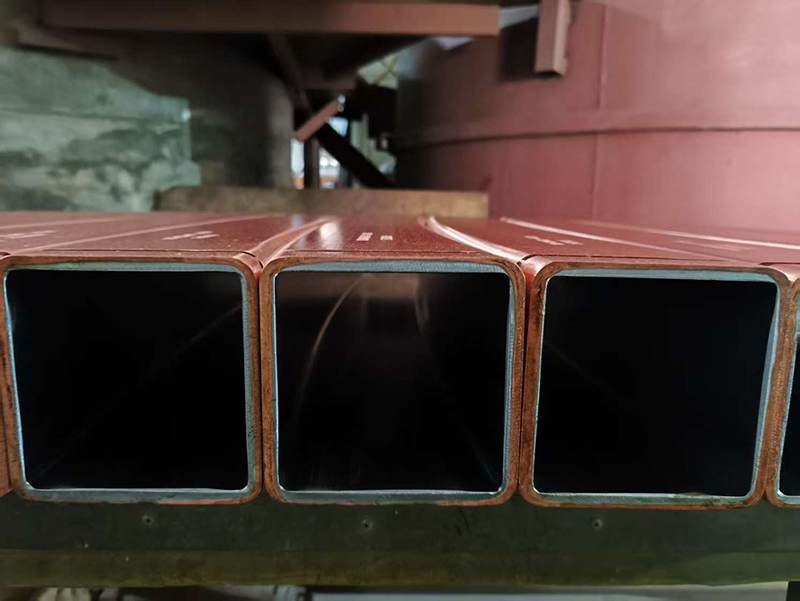
Silver-bearing copper is produced by adding approximately 0.08%–0.12% silver during the copper melting process.
The addition of silver can increase the recrystallization temperature of copper by approximately 100°C. This improvement helps the copper mould tube maintain better mechanical properties under elevated temperatures.
Compared with TP2, CuAg material generally provides improved resistance to thermal stress, surface wear, and high-temperature deformation. It is therefore suitable for casting conditions that require higher thermal stability and longer mould service life.
Cu-Cr-Zr
Cu-Cr-Zr is a high-performance copper alloy strengthened by chromium and zirconium. It offers excellent mechanical properties at both room temperature and elevated temperatures.
The material combines high thermal conductivity with excellent fatigue resistance, thermal stress resistance, and high-temperature strength. These characteristics make Cu-Cr-Zr particularly suitable for demanding continuous casting conditions where conventional copper materials may experience faster wear or deformation.
Compared with TP2 and CuAg, however, Cu-Cr-Zr is more difficult to process and manufacture. As a result, the production cost of Cu-Cr-Zr copper mould tubes is generally higher.
Nevertheless, its excellent overall performance makes it an attractive choice for continuous casting applications that require improved durability, thermal stability, and service life.


